
|

 Photo by freestocks on Unsplash[/caption]
A new partnership between Virginia Tech and Northern Virginia Community College offers students in the Washington, D.C. area a path to a degree in cybersecurity.
Originally launched by Virginia Tech in the fall of 2019, the joint program known as BIT-Cyber is a work-based course of study in cybersecurity and analytics within the university's Business Information Technology major. The work-based method of teaching allows students to put what they learn in the classroom into practice with real-life experiences.
NVCC has been expanding its footprint in the tech field. The community college announced in March 2022 that a $5.1 million data center lab would be constructed at its Woodbridge campus as part of the school's Workforce Development Center.
The goal of the program seeks to fill some of the 64,000 openings in the cybersecurity field in the Greater Washington D.C. area, including Northern Virginia.
Because of the program's online accessibility, many who would not have been able to take such classes without physically attending the university's Blacksburg campus have benefited from the program.
According to an impact study by Virginia Tech's Pamplin College of Business, 80 percent of those beneficiaries have been born outside of the U.S. The majority of the students, about 95 percent, are citizens of the United States while the remaining students hold green cards.
"It is my privilege to help serve a population that would not normally have an opportunity to access a Virginia Tech undergraduate degree," said Program Director Svetlana Filiatreau in a comment on the Virginia Tech website. "BIT-Cyber has positioned Virginia Tech to reach a very diverse student population, who are often unable to come to our Blacksburg campus due to their unique circumstances."
Since the coronavirus pandemic, educational institutions such as Virginia Tech and NVCC have further adapted their online class offerings in order to accommodate students. Many of these offerings have benefited students across the social-economic spectrum giving them access they may not have gotten prior to the pandemic.
Potomac Local News recently reported on Germanna Community College's College Everywhere program which has shown high success rates among male students, particularly African-American male students. The number of male students graduating from educational institutions like Virginia Tech and Germanna had been on the decline for several decades.
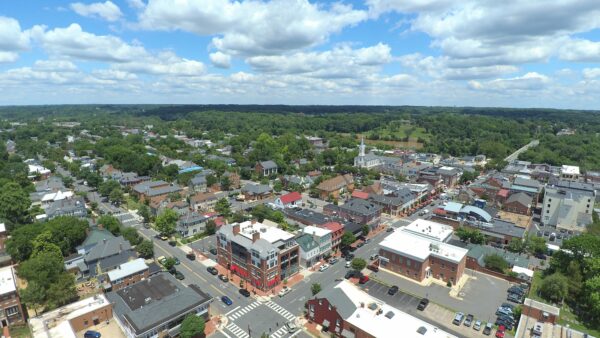

Yesli Vega, a member of the Prince William Board of County Supervisors, is running for office in the state’s new 7th Congressional District.

The Rappahannock Area Office on Youth will receive funding from Stafford County in order to fund substance abuse treatment programs.

The Stafford County Board of Supervisors has voted to hikes taxes on hotel stays and and rates for sewer and water.
The county’s Transient Occupancy Tax, a tax on hotel stays, will increase from five to seven percent on July 1. The increase is expected to provide an additional $766,250 in revenue for the county.

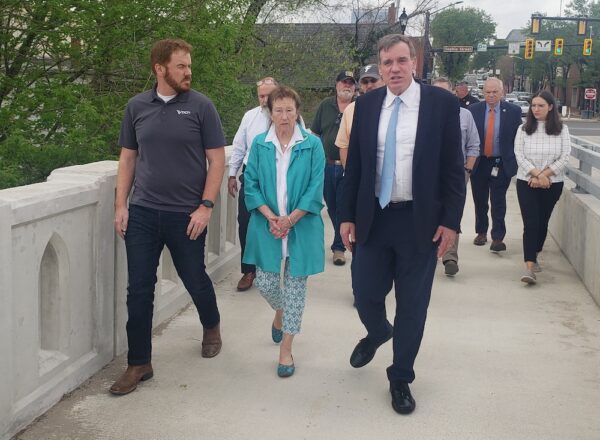
Senator Mark Warner (D-Va.) visited Fredericksburg as part of a week-long tour of Virginia to talk about a recently passed infrastructure bill. The Commonwealth will receive funds for transit projects.
Warner walked the recently rehabilitated Chatham Bridge to promote a bi-partisan Infrastructure Investment and Jobs Act package, which contains $537 million to repair and replace bridges in Virginia over five years. Virginia will receive $232 million for projects to improve transit from the act’s total $1.2 trillion in funds.
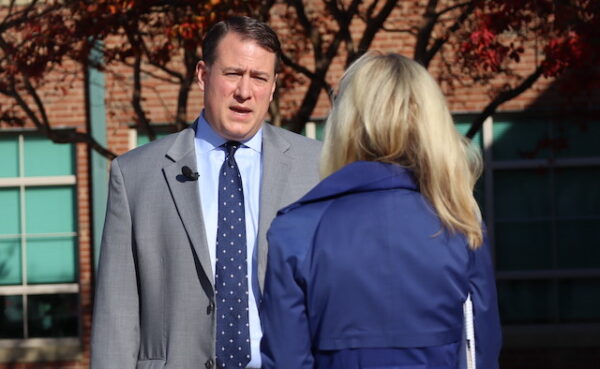
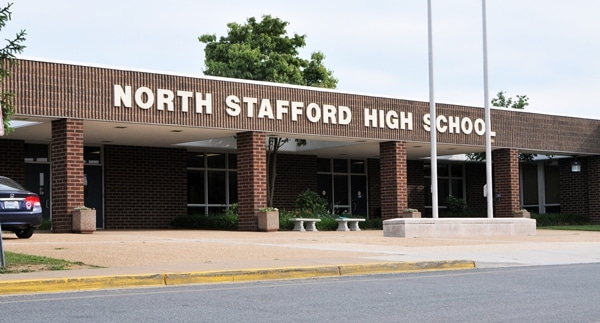
Stafford County will use money proffered for elementary schools to pay for new turf fields at Colonial Forge and North Stafford high schools.
The county's Board of Supervisors voted 6-1 to use $3 million to pay for the new fields. Colonial Forge and North Stafford are the only two of five county high schools that don't have turf fields. The Stafford County School Board of Supervisors has approved a contract with FieldTurf USA, an American-Canadian company specializing in such fields, to install the fields.
The county School Board, typically responsible for funding its operations, has been wrangling a funding source to pay for the field improvements.
The Board of Supervisors was presented with two options for funding. The method chosen was to use funds from proffers that have been written into Capital Improvement Plans for a future elementary school, the county's 18th primary school. The proffer funds that would go to Whitson Woods and Winding Creek Elementary Schools would be used to fund the turf field at North Stafford.
Winding Woods would provide $411,290, while Winding Creek would provide about $1 million.
The funds for the turf field at Colonial Forge would also come from proffers meant for two other elementary schools, Liberty Knolls West and Westgate. Liberty Knolls would provide $939,827 in funds, while Westgate would provide $506,060 for a combined $1.4 million to pay for the new field.
Carol Leicher and Margaret Lowery have spearheaded the campaign for the turf fields. For months, the pair have based their advocacy on safety issues with the grass fields, parity problems with the high schools that have turf fields, and turf fields have become the standard in high school sports.
"I talked to coaches at other schools, " said George Washington District Supervisor Tom Coen. "What they've told me is that the difference is the speed of the game. On the turf the speed is faster and if they're not training on turf then they're at a disadvantage."
Griffis-Widewater District Supervisor Tinesha Allen expressed disappointment that action for the turf fields were being accelerated over other concerns, such as the issues with the fine arts building at North Stafford, which stands separate from the main building. Allen was the sole dissenting vote.
"I'm not against the fields," said Allen. "I just think there are other pressing matters with the schools that need to be dealt with. I hope that the Fine Arts building at North Stafford can be solved sooner than later."
The board hopes to complete the fields before the beginning of the 2022-23 school year in August.