

PRINCE WILLIAM COUNTY, Va. – 
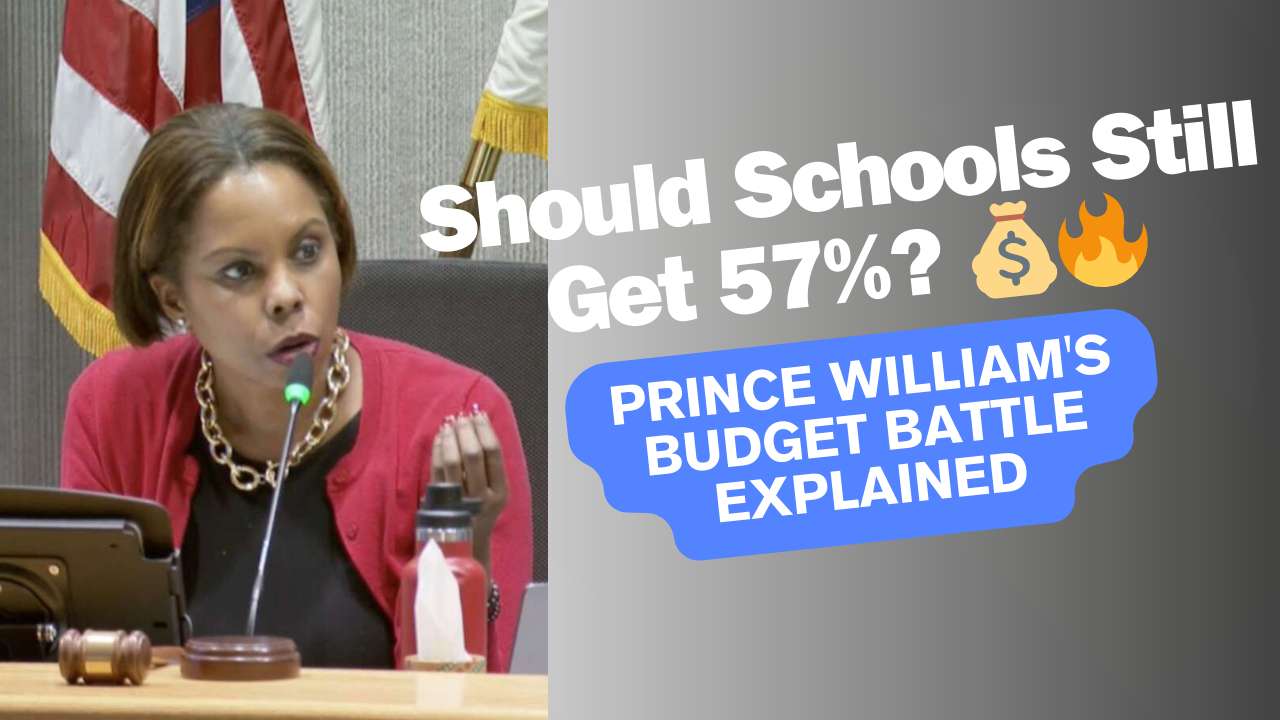
 For the final time in the fiscal year 2026 budget season, the Prince William Board of Supervisors debated the merits of the revenue-sharing agreement (RSA) it has with Prince William County Schools (PWCS), again.
Before 1998 — when the RSA was established between the supervisors and the School Board — the two bodies had an unofficial agreement where PWCS received 51% of the county’s revenue and the county received the other 49%.
In 1998, the bodies came to an official agreement that allocated nearly 57% of the county’s revenue to PWCS, with 43% left for the county’s operations. In 2013, the RSA was amended to increase PWCS’ allocation to over 57% and the county’s to just under 43%.
But, many supervisors on the current Board want to rip up the RSA, citing its unfairness to the county.
“We have to start having a very serious conversation about what the actual need and requirements are for our school system, and we need to revisit and start to adjust that revenue-sharing agreement based on what the requirements are, not just on an autopilot of tax increases,” Supervisor Tom Gordy said at the April 15 budget markup meeting.
Supervisor Bob Weir, joined by Gordy and Supervisor Yesli Vega, has led the charge to change the RSA. Weir and Vega initially wanted to make changes during the FY2026 budget season, but other supervisors asked the talks to resume after it was adopted.
“I’m open to having discussions about the revenue-sharing agreement, but not at markup literally a week before we adopt the budget,” Supervisor Kenny Boddye said. “… I don’t think it’s the appropriate time to buck that [at] a meeting before our budget adoption.”
Boddye said he wanted to engage more with the School Board before getting rid of the 27-year-long agreement.
“If we have School Board members who believe that it’s hamstringing them as well, I’d love to hear that from them. I would love to have a long discussion about that, because if they feel like they’re constrained by it, then we should talk about what [a post-RSA world] looks like,” Boddye said. “… Right now, we have a 57.23% commitment to the school division.”
Throughout the budget season, Weir has not refrained from making his opinions known about the RSA and PWCS’ spending. On April 1, when the School Board presented its budget to the supervisors, Weir expressed frustration when they did not present every single one of their needs.
“The revenue-sharing agreement does not work for either one of us anymore. … If you’re telling me you’ve left needs on the table because you’re trying to stay under the revenue cap established by the revenue-sharing agreement, that’s not good for us, it’s not good for you and it’s not good for the students,” he said on April 1.
Chair Deshundra Jefferson, for one of the only times during the budget season, expressed her opinion on the RSA discussion.
“I have always defended revenue-sharing, and I’m going to continue to defend revenue-sharing because our schools are what drive up our property values. Our schools are what make businesses want to come here, relocate here, Jefferson said.
“I don’t think the declining enrollment is a perfect indicator for how much [PWCS] needs. We have a growing population. We have also have a growing population with special needs. We have older schools that are in need of renovation. We are going to need new schools in our county,” Jefferson continued. “Our schools have a lot of needs, and for years, they were not getting the funding that they needed or deserved. We’ve got to make it up.”
Vega, on several occasions, has said the RSA is not fair to the county.
“We’re not talking about not fully funding our schools. We’ve been doing that. We’ve been more than generous with our surpluses. We have to give to them. Ask yourself if they return the favor. No, they don’t,” Vega said at the April 15 meeting. “… This is one of those hills that I am going to die on, because they have exactly what they need, and then some.”
Gordy has also emphasized that the RSA system is broken and does not fully accommodate PWCS.
“We need to have a serious conversation about meeting the requirements of our school system, not just having an arbitrary funding source that doesn’t fully fund or meet the needs of our school system,” Gordy said. “… I agree with Supervisor Weir. This is hamstringing us. And the budget and the revenue-sharing agreement are hamstringing them.”
Boddye, who is chair of the Board’s Finance and Budget Committee, said he was willing to discuss changes to the RSA with the School Board at those meetings. The next meeting is set for May 13, and no agenda has been uploaded.
It remains unclear after the supervisors voted to approve the School Board’s budget on April 22.
