
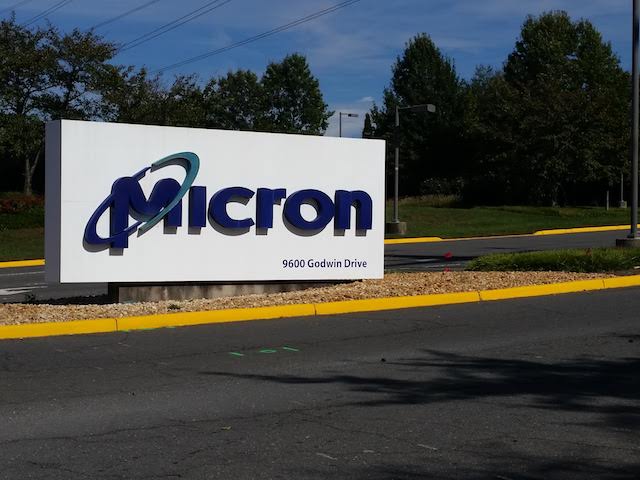
The Manassas City Council has voted to extend a lucrative tax incentive for Micron Technology Inc. through 2035, solidifying the semiconductor company’s continued presence in the city. The agreement, approved during the February 10, 2025, council meeting, ensures that Micron’s annual tax payments will increase by 4% while maintaining a lower tax rate than other manufacturers.
However, the decision has sparked concerns about a potential conflict of interest involving Mayor Michelle Davis-Younger. Multiple sources indicate that Davis-Younger is in a relationship with Delbert Parks, Vice President and Site Director at Micron’s Manassas facility.
Parks is named in an official letter from the mayor, dated the same day as the vote, outlining the incentives offered to Micron. During the meeting, Vice Mayor Mark Wolfe addressed speculation surrounding the relationship, dismissing it as “BS” and affirming that the mayor had recused herself from all Micron-related matters. He also stressed that the tax agreement was necessary to retain Micron’s $2 billion investment and 1,500 jobs in the city.
Davis-Younger and Micron have not responded to inquiries regarding the nature of their relationship and its potential impact on the council’s decision-making process. Parks previously donated $2,000 to Davis-Younger’s 2024 re-election campaign and was listed as one of her highest donors. He was also pictured with the mayor and her father at a swearing-in ceremony for new city council members on January 13, 2025.
Tax Incentive Details
Under the newly extended agreement, Micron will continue to pay a special semiconductor equipment tax rate of $0.756 per $100 of assessed value, significantly lower than the $2.10 rate applied to other manufacturers in the city. The agreement locks in Micron’s 4% annual tax payment increases, ensuring revenue growth for Manassas while providing Micron with financial predictability for its planned $2 billion expansion.
Micron’s current tax bill for 2024 stands at $5.46 million, but under the agreement, that figure will increase to $8.41 million by 2035. Had the city applied its standard tax rate, Micron would be paying over $15 million annually, making the deal a substantial benefit for the company.
Defending the Incentive
Patrick Small, the city’s Director of Economic Development, defended the tax incentive, arguing that Micron’s presence benefits all Manassas residents and businesses.
“This is reducing the tax rate on every other citizen and every other business in the city of Manassas because of Micron being here and handing us this $8 or $10 million that we get. That money’s got to be found somewhere else,” Small stated, reinforcing that losing Micron would result in higher taxes for residents.
Small also emphasized that the incentive is a competitive necessity, as Manassas competed with Singapore, Taiwan, and New York for Micron’s expansion.
“This is not money you’re giving away. This is money you don’t have. If this company didn’t invest in Manassas, you’d get nothing. If they leave, you lose $5.5 million a year,” Small added.
The special tax rate for semiconductor equipment was first introduced nearly 30 years ago by the Virginia General Assembly to attract and retain semiconductor manufacturers. Small asserted that the incentive has worked as intended, pointing to Micron’s continued investment in the city.
The incentive follows the announcement that Micron is expected to proceed with its $2 billion expansion, aided by $275 million in federal CHIPS Act funding.
Council Debate and Public Reaction
The decision was not without controversy. Councilwoman Theresa Ellis opposed the extension, arguing that the current tax agreement does not expire until 2030 and there was no urgent need to extend it now.
“I think my issue is it was going to end in 2030. And it’s $10 million a year. So to extend it for five more years, that’s $50 million. That’s a lot of money. They were prepared to have it end. I know they got the CHIPS Act. It’s also a lot more tax money going to them. I mean, that’s federal. But still, it’s the taxpayers’ money. So I can’t support this,” said Ellis.
Public comments were divided, with some residents questioning whether small businesses should receive similar tax relief instead of prioritizing a large corporation. Others expressed concerns that Manassas was becoming too reliant on Micron, drawing comparisons to IBM’s exit from the city in the 1990s, which led to economic hardship and declining property values.
Supporters, including Councilman Vasquez-Luna, defended the tax break, emphasizing that Micron is Manassas’ largest taxpayer, largest utility customer, and largest employer. He warned that losing the company could result in a 5% property tax increase for homeowners.