
William “Billy” Tucker was shocked when he received a bill for $2,543, up from $1,938 last year. The value of his wife’s 2019 Kia Credenza is assessed 18% over the past year, now valued at over $33,000, and his Dodge truck up more than $7,000 in a year, at $45,500.
His daughter drives a 2007 Honda Accord that Demeria says is worth $4,400, $870 more than last year. “I know I can’t get $4,400 for it if I tried to sell it,” said Tucker.
Overall, Tucker’s personal property bill is up 24% over last year, and his Real Estate tax bill is up 6%. Now 60, Tucker has lived and worked in the city all his life. He started working for IBM when big blue still had its massive presence in Manassas in 1981. Today, he’s a defense contractor at BAE Systems in the city.
Rising inflation has caused Tucker to become more mindful of his family’s expenses. City leaders approved the tax rates and the budget this spring. “They couldn’t afford to give us a break. I’m calling BS on that. They could tighten their belts, but they’re not,” said Tucker.
City officials said there are fewer cars on the market after automakers blamed supply chain issues for lack of production. In turn, the value of used vehicles increased, leading to higher personal property tax bills.
Manassas residents have seen their Real Estate and personal property tax bills increase every year over the past five years, including during the pandemic, through a combination of higher tax rates set by the City Council, increased tax bills despite lower rates, and the Commissioner of the Revenue assessing property at higher market rates.
The city government’s $406.5 million budget for the fiscal year 2023, up 13% since 2019, relies on Real Estate and personal property taxes to fund most of the city’s spending. This year, while some localities like neighboring Prince William County gave residents a break on their personal property tax bills, Manassas didn’t.
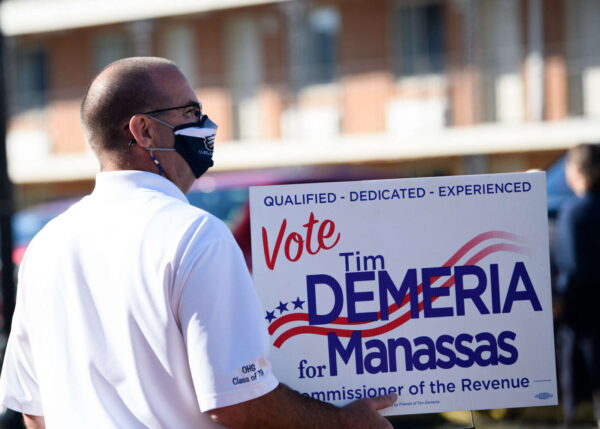
Following the dedication of a new football field at Osbourn High School on Thursday, August 25, we asked Commissioner of the Revenue Tim Demeria about how he assessed vehicles this year and if the city afforded any breaks to taxpayers on personal property tax bills.
“This is not the time or the place. I have no comment for you,” Dimeria told Potomac Local News.
Demeria did not reply to questions about the tax rate we emailed him on Wednesday, August 23. No stranger to the public or press, Dimeria served four terms as an elected Manassas School Board member, starting in 2006, before he was elected Commissioner of the Revenue last year.
As the tax burden on city families has increased over the past five years, the city has assumed more capital construction projects such as reducing the number of lanes on busy Grant Avenue from four to two, building a towering new police station, building an addition to its museum, and opening the city’s first library branch. Some city leaders call it “investing” in the city’s future.
Manassas anticipates collecting about $13 million in personal property taxes this year, an increase of about $1.7 million.
During a March 7, 2022, City Council meeting, when city leaders were hammering out the fiscal 2023 budget, Demeria told the Council his offices assess vehicles on a fair market trade-in value. He added that the City Council, which sets the tax rates, could lower the vehicle assessments by as much as 20%.
“I would prefer we didn’t do that because that would manipulate the clean trade-in value,” Demeria said on March 7.
During that meeting, City Manager Patrick Pate told Council members that assessments on cars eight years or younger would increase by at least 23%. “This is an anomaly. When more cars are manufactured, then [used] car values will go down,” Pate said.
“Wow, this is not good,” added Councilwoman Theresa Ellis, who, along with Councilwoman Lynn Forkell Greene, voted against hiking Real Estate tax bills.
While Manassas didn’t give residents a break on personal property tax bills, neighboring Prince William County did. When the Board of County Supervisors set its tax rates in April, it decided to assess vehicles at only 80% of their fair market value.
Prince William County responded to our questions and told us that, despite the tax break, the county anticipates seeing $4.9 million more in vehicle tax revenue this year, a $166.4 million total.
Meanwhile, Manassas officials pointed us to a statement on the city website, explaining that instead of a break on personal property taxes, the City Council did residents a solid by decreasing the Real Estate tax rate by three pennies.
You may notice a difference in your personal property tax bill. As you may know, the U.S. used-car market is currently upside down, where autos that normally depreciate over time are now increasing in value. If you have bought or sold a car in the last year, you probably have seen this yourself. The recent pandemic impacted the production of new cars with workers staying home. Further, when the workers returned to the production line, there was a computer chip shortage and supply chain issues that left automobile producers unable to produce new vehicles. The shortage in new cars has made used cars much more in demand and more expensive.
Because vehicle values have increased, the final personal property tax due has increased. However, knowing this to be true, City Council voted to decrease the real estate tax rate by 3 cents to accommodate the personal property tax bill.
According to city budget documents, a penny on the tax rate nets the city $600,000. Despite the reduction, most tax bills shot up on July 1 due to higher property assessments.
On Monday, May 9, the City Council, led by Democrats, voted 4-2 to hike the average Real Estate tax bill paid by homeowners by $234, creating an average of $4,875 on a home assessed at $363,300, the median home assessment in the city.
Comparatively, homeowners in neighboring Prince William County pay less, an average of $4,389 per home.
The City Council also voted itself a pay raise. Elected members got a $2,300 hike in their annual pay, putting the mayor’s salary at $20,000 and council members’ pay at $18,000, the state-allowed maximum.
Personal property taxes are due Wednesday, October 5, 2022.
*This story was corrected to reflect the correct increase in the Tuckers’ personal property tax bill.