

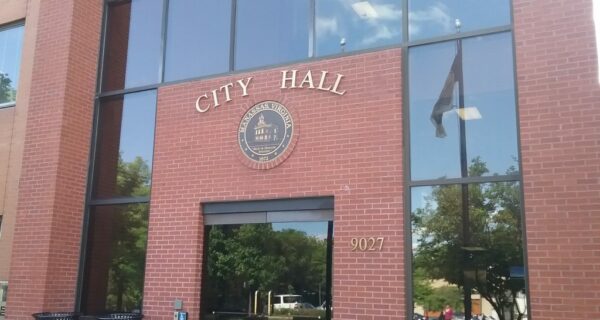
Manassas City leaders will consider giving their mayor a say.
A public hearing to discuss whether or not the city’s mayor should have a vote is expected to be announced soon. Historically, the mayor has cast a vote only to play the role of a tie-breaker in the instance the council is deadlocked on an issue.
If approved, the measure would give more political power to the political party to which the respective mayor belongs. Mayor Hal Parrish, II, a Republican who has on the city council since 1993 and city mayor since 2008, will not seek re-election in the November 3 General Election.
Republican Theresa Coates Ellis and Democrat Michele Davis Younger, both current council members, seek to replace him. A win for Davis Younger would increase the Democrats’ majority on the city council, which is controlled by Democrats 4-3.
If approved, the city’s charter would not only need to be charged to permit the mayor to have a vote at all times but could also be restructured to allow changes to what constitutes a “quorum” from three to four members, as well to change the charter to allow the city to have a non-partisan election.
Changes in the rules would mean there would need to be four city council members present at meeting to have a quorum, in order to cast a vote, up from the current required number of three.
Talks of giving the mayor permanent voting privileges have been ongoing since the city council took a retreat in January, said city attorney Craig Brown. If the council were to approve the changes, then the General Assembly in Richmond would need to approve them.
After further discussion, it was decided that a referendum vote where the public could make their voices heard would also be appropriate, as well as a public hearing before the referendum election.
City leaders discussed putting the changes to a referendum, to give voters a say on the matter. A referendum election could appear on the November 3 General Election ballot, but it has to be ordered by August 14, said Brown.
Brown went on to discuss the possibility of instituting a non-partisan election in the city. Brown said that there are two ways candidates can have their names on a ballot: by political party, or by a petition signed by a qualified number of voters.
If the council requests a change to the charter, that would mean that those seeking a seat on the city council would only be on the ballot if they got a necessary number of signatures. Political parties, he said, would no longer nominate a candidate to run for an open seat on the council but would still be able to endorse candidates for council.
