

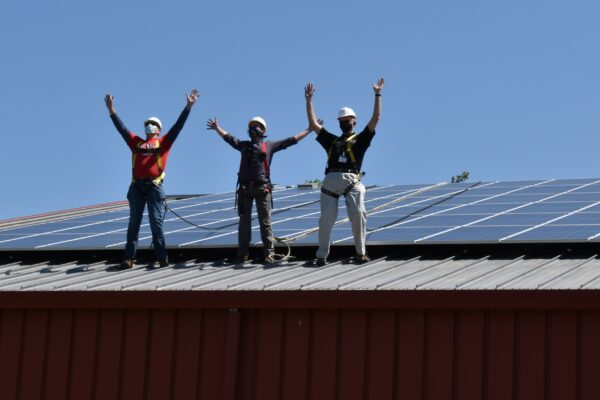
A new solar array was just unveiled on the roof of a Fredericksburg homeless shelter, the culmination of a two-year project.
This 115.2-kilowatt system will help power 75% of the energy needs at the Thurman Brisben Center, at 471 Central Road in Fredericksburg, adding up to $1,400 in monthly savings.
The total cost of the solar array was $330,000. It was paid for by a combination of grants and a power purchase agreement.
National and state grants, the Sunshine Lady Foundation, an anonymous donor, and Grid Alternatives Mid-Atlantic were all key players in funding and running the project. International solar contractor sPower donated the panels
With the power purchase agreement, a third-party entity owns the panels and typically receives a monthly fee for the energy they generate.
In this case, though, the project was able to do a full upfront payment. Part of the benefit to the power purchase agreement owners is that they get a 26% tax write off for the panels.
After five years the power purchase agreement contract will expire, and the Brisben Center will become full owners of the array for a $1 fee.
The maintenance of the solar panels is very minimal. There will be some troubleshooting in the first months to make sure the system is fully operational, but after that, the solar modules will just have to be periodically washed and monitored.
The Brisben Center has also increased sustainability through installing LED lights, a $30,000 project funded in part by a Dominion Energy grant.
These green initiatives are estimated to offset 108 tons of greenhouse gases annually.
Beyond the clean energy benefits, the project helped kick off a partnership with Germanna Community College that will help provide technical training to the homeless.
“I want to see opportunities for folks here at the shelter to be successful,” said David Cooper, CEO of the Thurman Brisben Center.
This workforce development program will help teach basic construction skills and train solar technicians.
Trainees from the shelter and other human service organizations came together for hands-on learning with the solar panels at the shelter.
Initially, these trainees were going to help with the actual installation of the solar panels, but limitations from the coronavirus prevented this.
This hasn’t been the only thing the coronavirus has affected.
Originally the project was going to be a two-week ordeal with the installers staying in a local hotel. Instead, they had to commute longer hours which extended the project to three weeks.
The shelter has also been adapting to accommodate people amidst this pandemic.
Half of the shelter residents who are still working have been relocated to area hotels. The other half who are more at-risk remain at the shelter where they can receive help from staff.
There have been no reported cases of the coronavirus at the Thurman Brisben Center.
