
WOODBRIDGE — Prince William County Board of Supervisors Chairman At-large Corey Stewart says its time make a decision about the future of the county’s rural area.
“We’re talking about the future of our county here,” he said. “If we do nothing, we’re going to see the rural area carved up into 10-acre lots, all with homes on them.”
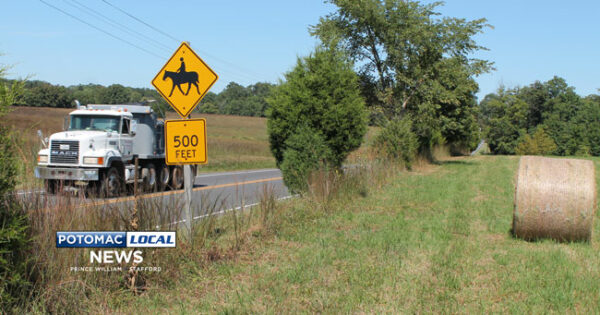
That’s been the rule since 1998 when the Board of Supervisors adopted the rural area known as the Rural Crescent — tract of land from Quantico to Manassas Battlefield National Park where there are few if any utilities like water and sewer, and new homes must be build on 10-acre lots.
The exception to the rule would be so-called cluster developments, where a large number of homes are built close together on a property while a large portion of the property remains preserved.
He’s looking for proposals from developers who want to build “small villages” of homes clustered together. For example, on a 100-acre property, Stewart wants to see homes on 40 half-acre lots while the remaining 60 percent of the property remains preserved open space.
But to do that developers need an incentive in the form of a density credit That would allow them to build denser developments in the county’s identified development urban areas, to include eastern Prince William along Interstate 95 in Woodbridge.
The need for incentives
But septic systems make the small village concept a challenge, as changes to state law in the last 10 years make it nearly impossible for developers to build a home with a septic drain field on less than two acres of property, said Coles District Supervisor Marty Nohe.
An incentive program could come in the form of a transfer of development rights program or TDR. Here, developers can buy the rights from landowners in the rural areas to develop their properties and transfer the rights to development projects in the county’s development areas.
The measure would require Board of Supervisors approval and would allow for public comment.
“As a Board, we can decide where it best makes sense to allow this sort of thing,” said Nohe.
The future of the Rural Crescent is in question. When it was adopted, Stewart says it was a temporary fix to preserve open space, but the move also hurt landowners who wanted to sell their properties to developers.
Property values in the rural area declined under the 10-acre rule, also known as downzoning. Developers want to build as many homes as possible and pay less for land that comes with restrictions.
Neighboring Stafford County last week did something similar and repealed a portion of its cluster ordinance which now limits where cluster or small village developments may be placed. Landowners in Stafford fear the action could have lessened the value of their properties.
Remember the Rural Preservation Study?
The county hired an outside consultant firm in 2013 to conduct a study of the rural area, where meetings to gauge public input from area landowners were held over the course of the year. Afterward, a thick document called the Rural Preservation Study was produced at a cost of $65,000 (not including the cost of county staff time, for which a figure is not available).
The study provided guidance on how to create a TDR and purchase of development rights (PDR) program where the government pays property owners for the rights to develop their property but leaves it to the owner to farm.
For Stewart, a PDR is a non-starter.
“Why should the taxpayers pay to preserve someone else’s land? It just doesn’t work,” said Stewart.
The Board of Supervisors heard the results of the Rural Preservation Study in May 2014 but declined to take action on anything outlined in the document. And while it’s been collecting dust, county leaders ordered even more studies on the rural area, to identify how the findings of the preservation study would best fit into the county’s comprehensive plan, and what types of development are appropriate in the fringe “ribbon areas” of the Rural Crescent.
The ribbon area study comes after a project first introduced in 2012 called the Mid-County Park and Estate Homes prompted leaders to request a study to determine if the cluster development and others like it would fit into the rural character of the land. A total of 130 homes are planned for the development off of Route 234 near Independent Hill on 325 acres, half of which will be preserved for a public park.
The results of that study are expected to be presented to the Board of Supervisors in about six months. At the same time, Supervisors could opt to amend the county’s zoning ordinance and comprehensive plan to allow for TDR and PDR programs.