
STAFFORD — Despite pleas from housing developers, Stafford County leaders made significant changes to the county’s cluster ordinance.
Afer two hours of public comment, mostly from housing developers, the Board of Supervisors to amend its ordinance and will now confine all new cluster developments to about 19,000 undeveloped acres in and around the county’s urban service area (USA) located largely along Interstate 95, and the Route 610 and 17 corridors.
With the partial repeal, the Board backed off its original plan for a full repeal and replacement of the ordinance that allows developers to preserve open space by clustering new homes in one section of a property.
The Board laid the groundwork for this plan earlier in the day when it voted to send a map of the USA to the county’s Planning Commission, asking it to amend the county’s comprehensive plan, reducing the number of acres on which developers could build by-right cluster developments from 100% down to the allowable state minimum of 40%.
Cluster development will now be permitted only on land zoned A-1 agricultural and A-2 rural residential in the USA development area.
The changes also mean that on land zoned R-1 suburban residential, a conditional use permit will be required to build homes on a maximum of 2.25 acres within the development area. Cluster developments will no longer be allowed on land zoned R-2 urban residential, or R-3 residential-high density.
Developers save money with clusters because they require fewer streets, and new and existing homeowners appreciate the preserved land for parks and recreation. They also said cluster developments save taxpayers money because there is less infrastructure to maintain once the neighborhood is built.
But county leaders said a few bad apples have soured county leaders on cluster developments, as some developers have chosen to “preserve” undevelopable land meant for stormwater retention ponds, and utility easements. Some of the preserved lands are also inaccessible to the public making it undesirable for parks spaces.
Developers pleaded with Supervisors not to change the current cluster ordinance that had permitted on land throughout the county zoned for agricultural or suburban development.
The measure adopted on Tuesday night keeps the county in compliance with a state law that requires Stafford County to have on the books.
Had a full repeal occurred, many developers warned of coming lawsuits. They also warned that without clusters, land developers would be forced to pay landowners less for their properties.
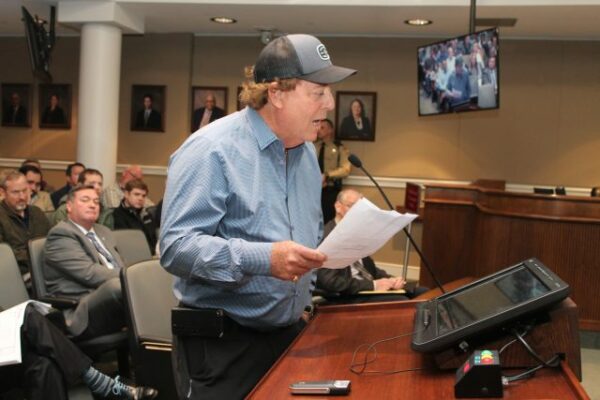
“If the A1 cluster is repealed the land in hardwood is going to go down 20 to 40%, said Micheal Stonewall, a regional developer in business since 1985. “Builders can’t afford to pay what we can pay with the cluster ordinance. Since we are the main people who buy land from landowners our land goes down.”
Other developers showed examples of how they’ve worked to incorporate open space with their developments, as well as told supervisors of the tens of thousands of dollars they had already sunk into developing plans for their developments.
Gene Brown, president of the Fredericksburg Area Builders Association (FABA), offer to work with leaders to change the cluster ordinance.
“FABA os not opposed to repealing the ordinance, but ask that you consider the impact,” said Brown.
Upset developers left the Board Chambers Tuesday night and said they wished county officials would grandfather in proposed cluster developments that now fall outside the urban services development area. The county pulled the rug out from under them, they added.
Rock Hill District Supervisor made the motion for partial repeal, and it was seconded by Garrisonville District Supervisor Mark Dudenhefer. Both leaders had been bullish on a full repeal earlier this month.
“This places cluster development closer to the urban service area which makes it easier for the county to extend utilities like water and sewer to the new homes,” said Maurer. And for all of those who said ‘don’t repeal,’ this meets them in the middle, and we will not be subject to all the lawsuits people have spoken to tonight.”
For Dudenhefer — who returned to the Board of Supervisors in January after serving four years as a Representative in the Virginia House of Delegates where developers fought for a repeal of proffer laws that gave local leaders more leverage over developers proposing new housing projects — it was personal.
“I wished we would have repealed the ordinance and started over. People who paraded to the microphone tonight are the same people in 2016 who laughed at me when we tried to work on proffer legislation,” said Dudenhefer. “Many of you guys supported the things that got slammed down our throat.”
The effort to fight the repeal of the cluster ordinance also became the subject of a series of newspaper advertisements and mailers. George Washington District Supervisor Tom Coen used these as examples, in addition to the multiple calls and emails he received on the subject, to counter claims from developers that public had not had a chance to properly voice their concerns on the matter.
“There’s the mailer sent out anonymously that someone put my cell phone number on, and no one elses,’ said Coen, refferring to the rest of his Board members.
Stafford’s cluster ordinance dates back to 1987 when it was first passed in an effort to preserve open space. It was amended five times between 1993 and 2007 and was repealed on March 20, 2012.
An ordinance was re-written and passed in June of the same year.