

For voters in Manassas City, what’s old is new again.
The city will use optical scanner voting machines starting with the November 2017 Election. The machines will use paper ballots, then will insert them into the ballot machine to be counted.
“If a recount is needed, the paper ballot allows us to determine the true intention of the voter,” said Manassas City General Registrar Susan Reed.
City officials budgeted $95,000 for the new voting machines, which will replace the old touch-screen voting machines placed into use in 2000, and older pull-lever machines. The purchase of the new machines will probably cost more than what is budgeted, said Manassas Electoral Board Secretary Patricia Fields.
A state mandate that requires localities the switch back to paper ballots makes the machines a must-do purchase. The state does not supply funds for the purchase, she added.
Reed and members of the city’s Electoral Board had two machines on display at Monday night’s City Council meeting. The Board is testing devices from two vendors — one in Virginia and one in Pennsylvania.
The vendor that is awarded the contract for the machines will also be responsible for printing custom ballots for each election. The information on the ballots will be reviewed by the Electoral Board, as well as the candidates listed before printing.
Last year, Prince William County made the switch to optical scanning machines. The printed ballots listed the full names of candidates. However, some candidates said they would rather have their nickname on the ballot instead.
Ultimately, the county decided not to reprint ballots. In Manassas, Reed said the information that will appear on city ballots next year would come directly from the State Office of Elections.
The new machines could be in the city as early as Jan 1. Afterward, the Electoral Board aims to hold a series of public meetings to demonstrate how the new optical scanning machines work.
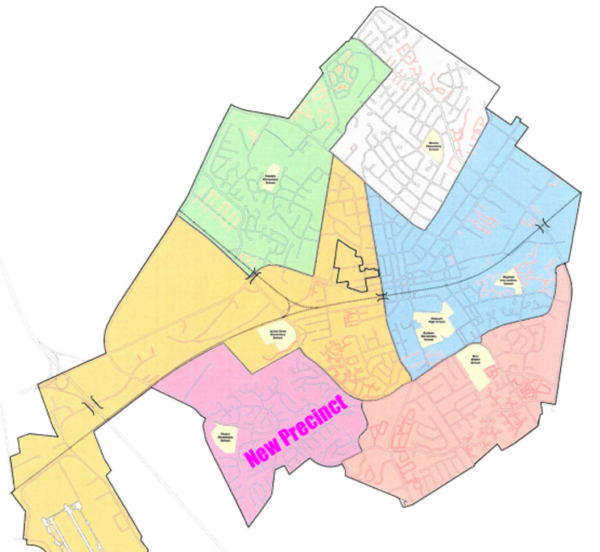
The City Council on Monday night also approved reviewed the proposed creation of the city’s sixth voting precinct. The council is expected to approve the new precinct in 2017, after the 2016 Presidential Election.
Rising population in surrounding voting precincts is the driving force behind creating the new polling area. Voters in the new precinct will vote at George C. Round Elementary School, which is not currently being used as a polling place.
Voters will be notified by the General Registrar’s office if their polling place changes.
The average population for a voting precinct is about 4,000 residents. The Weems Precinct is the exception to the rule with about 4,300 registered voters.
With less development planned in the Weems Precinct than other in city precincts, Fields said she isn’t concerned about the higher number of voters in Weems.
