

By URIAH KISER
MANASSAS, Va. — Supporters and opponents of an outer beltway in Prince William County spoke out last night. At times, it seemed whoever spoke loudest appeared to win the debate.
The controversial road aims to convert Va. 234 between Interstate 95 in Dumfries and I-66 in Manassas into a limited access highway and then extend it to Dulles International Airport.
Once known as the outer beltway, officials now call it the North-South Corridor. But some who live in Prince William’s Gainesville District near Manassas Battlefield National Park and on Pageland Lane where roads will be closed to accommodate the new highway, say it’s a bad idea.
About 30 people who sat in the audience at Thursday night’s meeting of the Prince William Committee of 100, which met at a hotel near where this road would be built, cited traffic concerns, increased noise and a loss of a serene countryside synonymous with the U.S. Civil War.
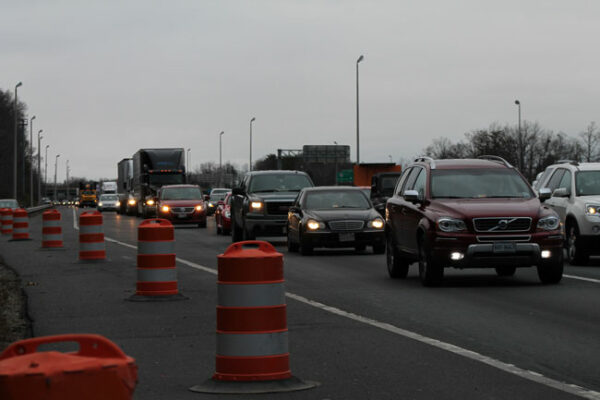
But the area is expected to grow by 55 percent, employment to rise by 74 percent, and daily trips made by vehicles are excepted to rise a whooping 123 percent, all by 2035.
Bob Chase, with the Northern Virginia Transportation Alliance, said the outer beltway already has support from local leaders, and will have the least impact possible on nearby neighborhoods, parks and flood plains when it’s built.
But it could take anywhere between 10 and 15 years to for construction to begin and, like other proposed road projects, there’s no money in the budget for it.
“Prince William residents waste more time in traffic than the average U.S. resident,” said Chase. “The way to attract new jobs is to build new roads for better connectivity.”
Supporters said the new road would help Manassas Regional Airport attract new private jets to the region and spur a life sciences center at George Mason University’s Prince William campus.
Chase went on to say the new road would help protect Manassas Battlefield, and then some members of the audience groaned. The battlefield, and the National Park Service that manages it, will play a large roll in the construction of the new road. They have agreed to close a portion of Va. 234 that splits the park between the campus of Northern Virginia Community College and Featherbed Lane.
Va. 234, along with U.S 29, bisects the battlefield. In exchange for the road closure, the outer beltway will be built over a small portion of the park. A resolution passed by the Virginia Commonwealth Transportation Board has Va. 234 being closed prior to the construction of another long talked about but unfunded road – the battlefield bypass. That, said Cary Garczynski who sits on the Commonwealth Transportation Board, as well as many residents opposed to the highway who spoke last night, goes against an original agreement signed in 1988 stating that Va. 234 cannot be closed until a battlefield bypass is built.
The North-South Corridor is one of 12 “corridors of statewide significance” where state transportation officials make funding, upkeep and construction a priority. An outer beltway is nothing new, as many who spoke last night said this road was talked about 20 years ago, but the idea was tossed out. Today, opponents said it’s a “zombie” road that’s come back to life that will help transport workers to Dulles Airport and freight and goods form the international hub through their backyards, but will do little to bring new jobs to Prince William.
“We’re a colony in Prince William, and it’s not in Prince William’s best interest to export workers out of the colony to work in other places,” said Charlie Grymes, head of the Prince William Conservation Alliance.
Grymes balked at an estimated $1.2 billion price tag for the outer beltway and said there were other transportation projects that should be funded, like widening I-66, expanding the Virginia Railway Express and building a proposed light rail system from Manassas to Dulles.
Garzynski disputed the estimated price tag and said no costs have been finalized. He added that there is no cash on hand to design the road even after officials decide to move forward. A public hearing on the matter, complete with a public question-and-answer session with officials, will be scheduled for June.
