
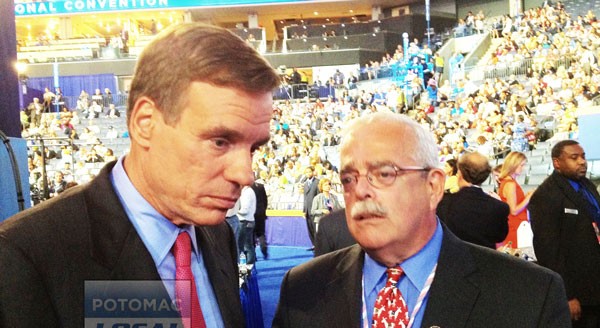
WOODBRIDGE, Va. — After the fallout from long lines at the voting polls during the Nov. 6 General Election, Congressman Gerry Connolly introduced a bill that aims to make voting more accessible.
Many precincts in Prince William County saw long lines at the polls as 72 percent of the electorate came out to vote, according to the county’s registrar.
Voters at Woodbridge’s River Oaks precinct overwhelmingly elected President Barack Obama to a second term, but waited at least four hours in a long line to do so.
More in a press release from Connolly:
Connolly’s Fair, Accurate, Secure and Timely (FAST) Voting Act of 2012 would create a competitive grant program in the model of Race to the Top, to encourage states to aggressively pursue election reform. Under the legislation, states that demonstrate the most comprehensive and promising reform plans will earn a greater portion of the grant funding.
“We faced long lines at a number of polling places in Virginia. That is unacceptable,” Connolly said. “Virginia and many other states can do better. This legislation is designed to jump start election reform and provide states with the tools to make their elections more efficient and more accessible to all voters.”
Connolly’s bill was introduced at the same time a companion bill was also introduced in the Senate by Chris Coons of Delaware. U.S. Senator for Virginia Mark Warner is also a co-sponsor of the bill.
Connolly’s press release went on to state:
This bill authorizes a federal program to award grants based on how well states can improve access to the polls in at least nine specific ways, including:
Providing flexible registration opportunities, including same-day registration;
Providing early voting, at a minimum of 9 of the 10 calendar days preceding an election;
Providing absentee voting, including no-excuse absentee voting;
Providing assistance to voters who do not speak English as a primary language;
Providing assistance to voters with disabilities, including visual impairment;
Providing effective access to voting for members of the armed services;
Providing formal training of election officials, including State and county officials and volunteers;
Auditing and reducing waiting times at polling stations; and
Creating contingency plans for voting in the event of a natural or other disaster.
